Why the Best Irish Pub NYC Spots Feel Like Home

New York has no shortage of bars that claim character. Plenty have exposed brick, a Guinness tap, and a playlist that leans Celtic after 9 p.m. That alone does not make an Irish pub. The places people return to, the ones they speak about with the kind of loyalty usually reserved for neighborhood diners or old bookstores, offer something harder to manufacture. They create ease. They make room for regulars without freezing out newcomers. They know how to be lively without becoming chaotic. Most of all, they feel inhabited rather than designed.
That is why the best Irish Pub NYC addresses stand apart. They do more than serve a proper pint. They give people a familiar place inside a city that often feels expensive, fast, and slightly impersonal. In a town where restaurants open with fanfare and disappear two years later, a real pub earns trust slowly. You can sense that the minute you walk in.
Home is a loaded word, especially in New York. For some people, it means a connection to Ireland, whether direct or inherited. For others, it means a room where nobody rushes them out after one drink. For a first-generation immigrant, a longtime union worker, a theater bartender finishing a late shift, or a young couple looking for somewhere without pretense, the feeling can land differently. Yet the best pubs manage to serve all of them at once. That is not accidental. It comes from a set of habits, values, and details that have very little to do with trend forecasting.
The room matters before the menu does
People often talk about food and drink first because those are easy to describe. The room tells the story earlier. A good Irish pub has a certain weight to it. The wood should look like it belongs there. The bar should feel worked in, not distressed by design. Light should flatter faces, not just the interior designer’s photo shoot. Even when the place is busy, there should be pockets of calm.
In New York, where square footage is precious and many hospitality spaces are built to maximize turnover, that feeling takes discipline. Owners have to resist making every inch louder, brighter, and more profitable. They leave enough space between tables that people can settle in. They let the back booth stay a little dim. They understand that if every surface screams for attention, nobody relaxes.
You can see the difference immediately between a pub built around hospitality and one built around theme. A themed space tells you what to think the second you enter. It telegraphs authenticity so aggressively that it starts to feel brittle. A true pub lets authenticity emerge through use. The mirror behind the bottles has seen years of conversation. The bartender knows which stool the retired teacher likes. The floor near the tap station is worn in exactly the way a busy pub floor should be.
That sort of physical environment does something subtle but powerful. It lowers the social stakes. In many Manhattan bars, you feel pressure to perform, whether through your outfit, your order, or the volume of your conversation. In a real pub, the room absorbs that pressure. You can arrive alone with a newspaper, meet a friend for one drink that turns into dinner, or join a noisy group after work, and none of those modes feels out of place.
A proper welcome is not a gimmick
One of the clearest marks of a great pub is how it handles the first five minutes. Not with rehearsed enthusiasm, but with calm competence. Someone makes eye contact. Someone lets you know where you can sit. If the bar is three deep, the staff still gives you the sense that you have been seen. That matters more than many owners realize.
Hospitality in an Irish pub tradition has always involved a certain directness. You do not need the theatrical friendliness common in some American service settings. In fact, too much polish can feel suspicious in a pub. What people want is warmth without a script. A bartender who remembers your usual is nice. A bartender who senses whether you want to talk or be left alone is better.
This is one reason regulars become fiercely attached to certain places. Their loyalty is not based only on product. It is based on recognition. In a city where many daily interactions are transactional, being known in a low-key way is powerful. The host who says, “usual table if you want it,” or the server who brings mustard without asking because you always order the bangers, is not just doing good service. They are restoring continuity.
There is also a difference between friendliness and forced familiarity. The best Irish Pub NYC spots understand boundaries. They know how to create community without making guests feel monitored. That balance is hard to teach, and it usually reflects leadership. Owners and managers who stay close to the floor tend to build teams that understand the emotional rhythm of a room.
The sound of a good pub is conversation
Music matters, but it should never bulldoze the main event. A pub is, above all, a place for talk. That sounds simple, yet it is increasingly rare. Too many bars treat volume as energy. They crank playlists so high that patrons lean forward, repeat themselves, and leave after one round. A good pub does the opposite. It creates a soundscape where conversation can expand.
There is a distinct difference between a Friday crowd singing along to traditional tunes and a room defeated by speaker settings. One feels communal. The other feels like a management choice. The best pubs know when to let music lead and when to let it recede. Live sessions, when handled well, deepen the room’s identity. Handled poorly, they flatten it. If the musicians are arranged like a spectacle rather than folded naturally into the room, the evening starts to feel staged.
Sport adds another layer. Irish pubs in New York have long functioned as gathering points for football, rugby, hurling, Gaelic games, and of course the local New York teams. The challenge is integrating that energy without turning the place into a generic sports bar. Again, the best venues manage the balance. Screens are present, but they do not dominate every sightline. Fans can celebrate. Other guests can still hold a conversation. It sounds obvious until you have spent an evening trapped under six televisions and a subwoofer.
Guinness is a test, but not the whole test
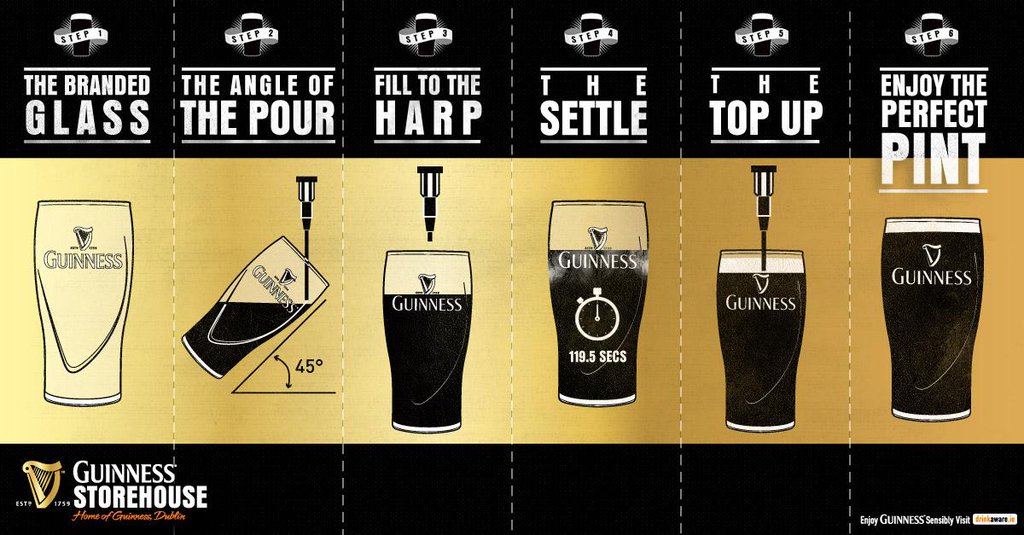
Any conversation about an Irish pub eventually reaches Guinness. Fair enough. A bad pint is a warning sign. Temperature, line cleanliness, glassware, and pour discipline all matter. The staff should know that stout is not just another draft handle to yank thoughtlessly. If a pub cannot be trusted with that cornerstone, it raises questions about everything else.
Still, focusing only on Guinness can miss the larger point. A memorable pub takes equal care with the rest of the drinks list, even if that list is not huge. Whiskey should be chosen with intention. Not every bottle needs to be rare or expensive. A thoughtful range, from approachable standards to a few bottles for the curious drinker, says more than a crowded back bar filled to impress. Beer selection should reflect the place’s identity rather than chase every trend. Cocktails, if offered, should suit the room. A pub does not need smoke-filled cloches and twelve-syllable ingredients. It needs drinks people actually want to order twice.
Food plays a similar role. Pub food should not be treated as an afterthought, especially in New York where diners have choices at every price point. The standard fare still matters because the standard fare reveals discipline. Good shepherd’s pie is not glamorous, but it tells you whether a kitchen respects seasoning, texture, and temperature. A decent fish and chips order requires timing. Brown bread that tastes fresh rather than symbolic can earn more goodwill than a flashy special.
There is a practical side to this. Many people use pubs as all-purpose gathering places. They come before a show, after a funeral, during a soccer match, or to meet family members arriving from out of town. The menu has to support those varied uses. It should offer enough comfort to anchor a long conversation and enough consistency that guests know what they are walking into.
Familiarity is built through repetition
The home-like quality of a great pub does not appear in a single perfect night. It forms through repeat visits. The second time, you recognize the corner table. The third time, the bartender remembers what you ordered. By the sixth or seventh, you start measuring other places against it. That process is especially important in New York because so many residents are far from where they grew up.
For Irish immigrants, pubs have historically done serious cultural work. They have functioned as informal employment networks, social clubs, language spaces, and newsrooms. Older New Yorkers still talk about pubs where people found apartments, jobs, and community long before everything moved online. Even today, many Irish bars serve as cultural anchors for diaspora groups, county associations, and event nights tied to sports or holidays.
Yet the best pubs do not fossilize into museums of identity. They stay open to the city https://privatebin.net/?58d0b001f237bb5a#HKkZWWZ8hdyxLPUtbNvd7nLpCqQsEpt4QVQmZXiHyqQU around them. That is one reason some of the strongest Irish Pub NYC institutions have endured for decades. They welcome office workers, artists, tourists, students, and locals from every background while preserving a core sense of self. They do not flatten their Irishness to become generic, nor do they weaponize it into exclusivity. They simply inhabit it with confidence.
That confidence shows up in small choices. Staff who know the difference between a guest interested in Irish whiskey and one just wanting a quick beer. Menus that include staples without caricature. Holiday celebrations that feel spirited rather than commercially desperate. A pub that only comes alive on St. Patrick’s Day is usually missing the point. The real test is a wet Tuesday in February.
There is comfort in ritual
Part of what makes a pub feel like home is ritual. Not grand ritual, everyday ritual. The first sip of a stout after a long shift. The same stool at the end of the bar. Sunday lunch with family. Watching a match with people who understand exactly when to go silent. These repeated acts help turn a public place into a personal one.
New Yorkers crave this more than they always admit. The city offers endless novelty, but novelty is exhausting without some counterweight. A pub provides pattern. You know roughly how the room will smell, how the light will look at 6 p.m., how the bartender will set down the pint, how your friend will wave from the far side of the room. That predictability can feel luxurious in a place where rent rises, jobs change, and neighborhoods remake themselves with unnerving speed.
I have seen this most clearly in pubs that serve mixed generations. You might have a table of grandparents, a cluster of twenty-somethings on a date, and two construction workers having a late lunch, all sharing the same room without friction. That kind of social layering is rare. It requires a venue broad enough to hold different tempos at once. Family restaurants sometimes manage it. Diners do too. Great pubs belong in that category.
The best ones know when not to modernize
Every long-running pub faces pressure to update. Some changes are necessary. Bathrooms need work. Kitchens need investment. Payment systems need to function. But there is a difference between maintenance and reinvention. Too many bars lose their soul trying to look current.
The best operators understand that a pub’s value often lies in what it refuses to chase. You do not need every design trend, every beer style, or every social media stunt. In fact, a slightly stubborn commitment to the old strengths can be a major advantage. Comfortable banquettes age better than concept furniture. A chalkboard special often feels more trustworthy than a laminated lifestyle brand statement.
That does not mean great pubs are anti-change. It means they filter change carefully. If they add a nonalcoholic beer program, it should be because guests want it, not because it photographs well. If they update the food, the dishes should still fit the room. If they renovate, the place should feel cleaner and sturdier, not as if it has been stripped of memory.
A pub that understands itself can survive shifts in drinking culture better than one that depends on trend traffic. That matters now. Younger guests often drink less than earlier generations. Weeknight habits have changed since the pandemic years. Rent and labor costs are brutal. Under those conditions, the pubs that endure are usually the ones offering something emotionally durable, not merely fashionable.
Not every cozy bar is a great pub
There are edge cases worth acknowledging. Some bars feel intimate but still fail as pubs because the welcome is thin or the menu is careless. Others pour a very good pint but seem built primarily for tourists. Some neighborhood spots become so clique-ish that newcomers feel tolerated rather than included. Familiarity can become gatekeeping if a house is not careful.
A few signs usually tell the story:
- Regulars are comfortable, but strangers are acknowledged.
- The room supports conversation even when it is busy.
- Food and drink are handled with consistency, not just nostalgia.
- Staff shape the atmosphere instead of merely servicing it.
- The place feels lived in, not staged for authenticity.
These are not rigid rules, and every great pub bends one or two on a given night. Service can slip during a rush. The music may run louder during a big match. A kitchen can have an off evening. What matters is the underlying culture. If the foundation is right, guests are willing to forgive the occasional miss because they trust the place.
Why New York especially needs these places
In smaller towns, the local pub often fits naturally into daily life because geography and routine support it. New York complicates that. People commute across boroughs. Work hours stretch late. Social circles are fragmented. Loneliness can thrive in a crowd. That is exactly why a true pub matters here.
It offers a form of belonging that does not demand much. You do not need an invitation. You do not need to spend heavily. You do not need to explain yourself. You simply arrive, take your place, and let the room do some of the social work. For a city full of transplants, that can be the difference between feeling adrift and feeling rooted.
This is especially true after life events that leave people searching for familiar ground. I have watched pubs carry mourners after memorial services, host exhausted parents meeting for an early supper, and absorb office workers stunned by layoffs. Few venues can move from celebration to consolation with equal grace. Pubs can, if they are run well. Their emotional range is one of their great strengths.
The Irish tradition adds another useful element: permission to linger. American hospitality often treats table time as a problem to be managed. A good pub treats time as part of the offering. Not endlessly, and not without commercial realities, but enough that guests can exhale. That sense of unhurried presence is deeply appealing in New York, where nearly every other system tells people to move faster.
What people remember years later
Ask someone about a beloved pub and they rarely begin with square footage or awards. They talk about a winter night when the storm kept everyone inside and strangers started chatting at the bar. They remember the bartender who kept the kitchen open a few minutes late. They remember where they watched a championship match, where they introduced a future spouse to old friends, where they found company after a hard day they had no interest in discussing.
That is the point. Home is not an aesthetic category. It is a record of repeated care. The best Irish pubs in New York earn that status because they understand hospitality as memory-making, even when nothing dramatic happens. The pint is right. The light is low. The room holds steady. You leave warmer than when you came in.
For all the noise around what is new in New York dining and nightlife, there is a quieter truth underneath it. People keep searching for places that make the city feel manageable, generous, and human. The best Irish Pub NYC destinations do exactly that. They offer continuity without stiffness, community without pressure, and comfort without cliché. That is why they feel like home, and why the good ones never really go out of style.
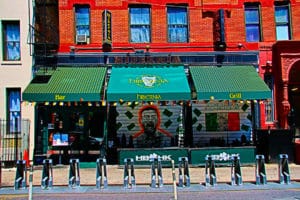
Hibernia Bar
401 W 50th St
New York, NY 10019, United States
Phone: +1 212-969-9703
FAQ About Irish Pub NYC
What is the best Irish pub in NYC?
The best choice depends on your location and preferred atmosphere. Hibernia Bar is a neighborhood Irish pub in Hell's Kitchen offering Guinness, Irish whiskey, pub food, and sports viewing.
Where do Irish people go in NYC?
New York's Irish community gathers in many neighborhoods and venues. Hibernia Bar welcomes Irish expats, local residents, and visitors at 401 W 50th St, just off Ninth Avenue.
Where can I watch GAA games in New York?
Hibernia Bar lists GAA among the sports it shows. Call +1 212-969-9703 to confirm coverage and opening times for a particular match before visiting.
What is the difference between a bar and a sports bar?
A sports bar emphasizes televised games and a shared viewing atmosphere. Hibernia combines sports viewing with the food, drinks, and hospitality of a neighborhood Irish pub.